Winning on More Than Price: How DTI Turned Environmental Documentation Into an Advantage
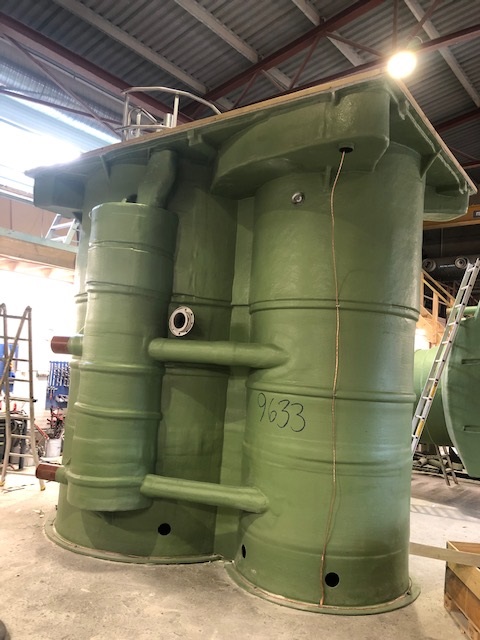
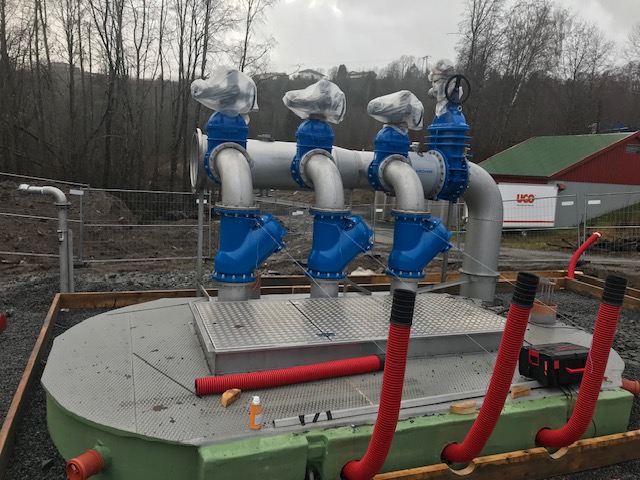
For Driftsteknikk Industrier, or DTI, the work starts before a pump station ever reaches the ground. The company builds complete prefabricated pump stations, with tanks, piping and technical solutions prepared for operation.
That makes DTI slightly different from many other River Group companies.
“Many of the others work mainly with service and operation of pumps and equipment,” says Managing Director Morten Hallan. “We build complete pump stations.”
Now, that production expertise has been paired with something increasingly important in public procurement: environmental documentation.
Together with Xylem, DTI has won a framework agreement with the municipalities of Haugesund, Tysvær and Karmøy. The agreement runs for 2+2 years and could include between 30 and 40 pump stations. Each pump station is valued at around NOK 1 million, with a service building from Kafra, another River Group company, added on top.
In total, the agreement could represent NOK 40–50 million.
And according to Morten, the decisive factor was not price alone.
“We won because of a combination of technical solution, environmental certification and price,” he says. “There were other elements than price in the competition that were weighted.”
Like Nutritional Labels for Products
The environmental documentation is built around EPDs, or Environmental Product Declarations. Tobias Meisdal, CFO at DTI, has led much of the work.
“An EPD is basically an environmental account for our product,” Tobias explains. “A bit like nutritional information on food. It allows products in the same category to be compared based on environmental performance.”
To create an EPD, DTI has to document the full climate footprint of the product. That means collecting data on materials, transport, suppliers, production methods and more. The result is a lifecycle analysis, translated into a total CO₂ account for the product. It is detailed work.
“We have to collect data on everything that goes into the product, from A to Z,” Tobias says. “It is a large process, and it takes both time and resources.”
DTI has also become certified to create EPDs in-house using an LCA tool. Each declaration must then be verified by a third party before publication, and remains valid for five years.
An EPD is basically an environmental account for our product. A bit like nutritional information on food. It allows products in the same category to be compared based on environmental performance.
Prepared for a Changing Market
DTI decided to invest in EPD competence a little over a year ago. The company had seen the direction the market was moving, especially in municipal tenders where environmental aspects are increasingly weighted.
“We wanted to be ahead of it,” Tobias says. “More customers are asking for this, and we believe it will become something everyone expects.”
In this specific tender, DTI was the only bidder able to provide the required environmental documentation.
“That made a difference,” Tobias says.
The investment has already had effects beyond the framework agreement. DTI has also won other assignments by showing that EPD documentation can be provided when required.
“For us, there are two parts to it,” Morten says. “One is being able to say that we have the competence and can deliver the documentation. The other is preparing the actual document for a specific delivery. For this framework agreement, we did both.”
A Tool for Improvement
The EPD work is also giving DTI new insight into its own production. By mapping the full lifecycle of the product, the company can see where improvements may have the greatest effect.
“It becomes a useful improvement tool for us,” Tobias says. “We can see what affects the total footprint, and where changes can improve the numbers.”
One important finding is the expected lifetime of the products. Through the process, DTI has been able to document a product lifetime of more than 100 years.
“That is something we can prove with data,” Tobias says. “It makes us more competitive, and it builds trust.”
For Morten, the work has confirmed that environmental documentation is no longer just an administrative requirement. It is becoming part of how quality is measured.
“It has taken a lot of effort to get here,” he says. “But we are confident this is the right direction, and we see it as an investment.”
The first deliveries under the framework agreement have already started. For DTI, the project shows that environmental documentation is becoming more than a requirement. It can be a real competitive advantage.
Quick Facts
- Company: Driftsteknikk Industrier / DTI
- Interviewees: Morten Hallan, Managing Director, and Tobias Meisdal, CFO
- Project: Framework agreement with Haugesund, Tysvær and Karmøy
- Partner/distributor: Xylem
- Service buildings delivered by Kafra
- Agreement period: 2+2 years
- Estimated scope: 30–40 pump stations
- Estimated value: NOK 40–50 million
- DTI can create EPDs in-house, with third-party verification
- Documented product lifetime: more than 100 years